Watch the State of the Union address -- you can find the video at the White House website (link).
Record at least three of the president's main points. Explain why you chose these points.
Then, evaluate his speech. Is it successful? Explain your response.
This assignment should take a minimum of 2 paragraphs to complete. It is due tomorrow, and is worth 10 points.
Wednesday, January 25, 2012

Tuesday, January 24, 2012
Test Review for Thursday
Test Review:
- 75 points
- 10 countries
- 15 multiple choice (including maps and graphs)
- 50 points writing (short answer, reading comp., short free response essay)
- Chapters 9.1-9.2; 10.1, 10.2, 10.4
- Urbanization
- Haitian Revolution
- Haiti's economy and reasons
- Elections/State of the Union
- Mexico
- Brazil
- Influence of Europeans (Spanish, French, Portuguese) on Latin America
- Indigenous Peoples (Taino, Aztecs)
- Comparisons between U.S. and Latin American countries
Thursday, January 19, 2012
The Slave Trade and the Caribbean
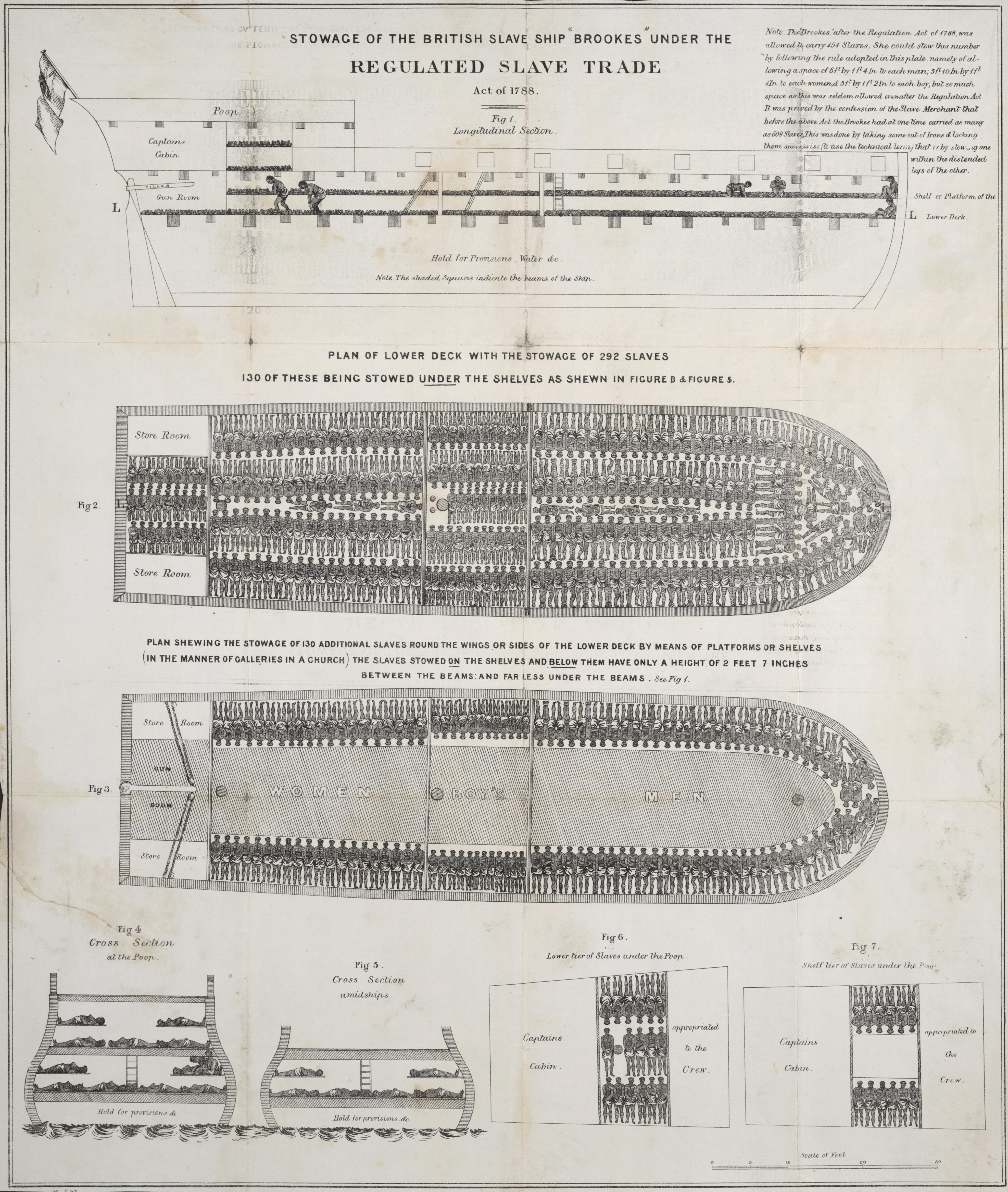 |
| The plan for the slave ship Brookes. |
Notice: We will use specific facts and data to form our search criteria.
Find the entry for the ship on the slave trade database site.
- The slave ship Brookes is one of the most famous on record.
- The ship was designed to carry 454 humans as cargo
- Instead, the ship carried as many as 609 people in its cargo hold at once, as the diagram shows (click for a larger image if you are interested)
- The ship was so notorious that abolitionists used its diagram to help force the end of the slave trade
- Thomas Molyneux owned and captained the ship
- The ship purchased slaves on Africa's Gold Coast region
- It landed in Jamaica
 |
| Students at Durham University lay down in the form of the slave ship Brookes. Although they match the approximate plan of the ship, the students have far more space than the slaves would have. |
When you do this search on your own, you will use any of the following to find information about specific ships:
- Ship names
- Captain names
- Number of slaves embarked
- Number of slaves disembarked
- Names of places
Important vocabulary words:
- Query -- search criteria
- Vessel -- ship
- Embark -- get onto a ship
- Disembark -- get off of a ship
- Tonnage -- the weight of a ship (in tons)
- Middle Passage -- the voyage across the Atlantic Ocean between Africa and the Caribbean
Tuesday, January 17, 2012
Arguable Statements Homework
Tonight's Homework: Arguable Statements
Use Ch. 10.2 to respond to the following questions about the Caribbean on loose leaf.
20 points, due tomorrow on your desk.
Use Ch. 10.2 to respond to the following questions about the Caribbean on loose leaf.
20 points, due tomorrow on your desk.
- Agree or disagree with the following statement: "The Taino people were responsible for the beginning of the slave trade." Support your response with at least two pieces of evidence from the text.
- Agree or disagree with the following statement: "The culture of the Caribbean is most heavily influenced by the culture of European countries." Support your response with at least three pieces of evidence from the text.
Wednesday, January 11, 2012
Latin American Map Practice
You can find a map game for Central and South America here.
There is a map for the Caribbean here.
Use these games to prepare for your 15 point map quiz on Friday.
List of Countries
I will choose 10 of the following 15 countries for the quiz:
There is a map for the Caribbean here.
Use these games to prepare for your 15 point map quiz on Friday.
List of Countries
I will choose 10 of the following 15 countries for the quiz:
- Brazil
- Peru
- Argentina
- Chile
- Mexico
- Cuba
- Dominican Republic
- Haiti
- Colombia
- Venezuela
- Bolivia
- Jamaica
- Panama
- Paraguay
- Uruguay
List of Landforms
I will choose 5 of the landforms listed below for you to draw and label on the quiz.
- Amazon River
- Rio de la Plata
- Tierra del Fuego
- The Pampas
- The Andes
- The llanos
- The Orinoco River
- The Sierra Madres
Thursday, December 15, 2011
Quarter 2 Exam Review, Part 1
- What is Africa's longest river? Where is it located? How does it affect the people around it? What ancient civilization formed around it? What effect(s) does it have on trade?
- What are the causes of desertification? Where, specifically, does it happen in Africa? What are its specific effects on the people who live nearby?
- What is the relative location of the Red Sea? What are its effects on the nearby countries?
- Argue for or against the following statement: "A new trade route through the Persian Gulf spelled the end for the Aksumite Empire.
- Describe the major trade routes in Eastern and Western Africa.
- Describe the goods traded by Eastern and Western African trade empires.
- What does the existence of Aksum, Ghana, Mali and Songhai tell you about Africa before the arrival of the Europeans?
- What is the major reason that North Africa is culturally different from Sub-Saharan Africa?
- Name four major European mountain ranges. Then, in general, describe the impact of these mountain ranges on European countries.
- Argue for or against the following statement: "In general, Italy's climate is warmer than the climate of Germany." Support your response with evidence from your text.
- If a merchant wanted to travel from Switzerland to the Black Sea, what would be the best route for her to take? Explain your response.
- If a merchant wanted to travel from Switzerland to London, England, what would be the best route for him to take? Explain your response.
- What are the two major rivers in Europe? Which direction does each flow?
- How did General Hannibal use his knowledge of geography to catch the Romans by surprise?
- Describe each of the three levels of human society discussed in class.
- Argue for or against the following statement: "Ancient Rome reached the most advanced level of society." Support your response with evidence from your notes.
- Argue for or against the following response: "Russia has not moved past the most basic level of human society." Support your response with evidence from your notes.
- What was the Berlin Conference? What were its immediate effects? What were its long term effects?
- How did colonialism impact Africa?
- Define command economy.
- Define free market economy.
- Compare and contrast a command and a free market economy. Explain which would be better for independent businessmen and women.
- What is the Great Rift Valley? What is its impact on the land around it?
- Define divergent plate boundary.
- Argue for or against the following statement: "European colonialism had a positive impact on the people of Africa." Support your response with evidence from your text, notes and lectures.
- What is the Occupy Wall Street movement? What are its goals?
- Write a three-part thesis for a potential essay comparing and contrasting the culture of your assigned African country with the culture of the United States.
Wednesday, December 14, 2011
Review questions for Thursday's test!
- Where is Olduvai Gorge? What is its significance?
- Describe the relative location of ancient Ghana, Songhai and Mali. Then, describe the relative location of Aksum.
- Describe the reasons for the success of Ghana, Songhai and Mali.
- Describe the reasons for the success of Aksum.
- Summarize the reasons why each of the empires above fell.
- Describe the economic importance of the Red Sea.
- What countries would you find in the Horn of Africa?
- Describe the positive and negative effects of the Nile River on the surrounding countries.
- What landform forms a barrier between northern and southern Africa?
- What religion dominates North Africa's culture?
- Describe the relative location of the Great Rift Valley. Then, describe its impact on the land and people around it.
- Describe the Berlin Conference, then summarize its impact on Africa. Finally, argue persuasively whether or not the Conference had a positive or a negative effect on Africa.
- Define desertification. Describe its potential impact on people and animals it affects.
Subscribe to:
Posts (Atom)